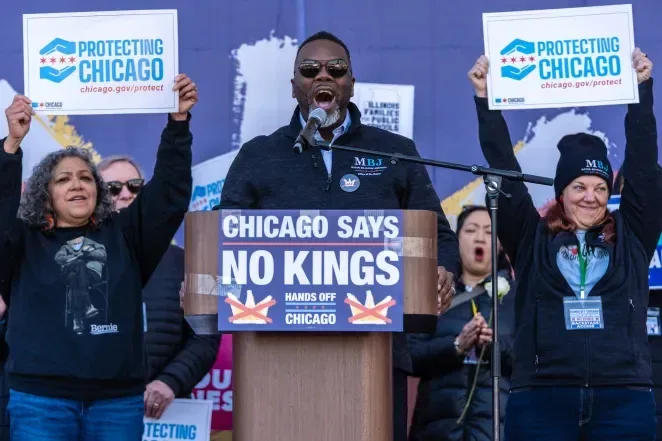
March 28, 2026 (New York time) – Chicago Mayor Brandon Johnson continues to push his reparations plan for the Black community despite tight financial conditions with a projected budget deficit of approximately $150 million for fiscal year 2025.
The city government launched an initiative called “Repair Chicago,” organizing community forums to collect real-life experiences of Black residents regarding past harms. The first event took place this week, with plans for additional dialogue sessions through the end of April.
Speaking at the program, Johnson emphasized putting residents’ voices at the center of policy: “People’s experiences are evidence, and we are making that the foundation of this work.”
According to the plan, the program will include activities such as workshops, community dialogues, public hearings, and field surveys to support the research team in developing a report on reparations policy.
This move follows a 2024 decision when Johnson signed an executive order establishing a 40-member task force to study the historical harms suffered by Black residents in Chicago. The event took place alongside ongoing debates around the Barack Obama Presidential Center project in the area. Earlier in 2024, he also assigned Chief Equity Officer Carla Kupe to lead the program with an initial budget of $500,000.
However, this plan unfolds amid significant financial pressures on the city. Chicago — the third-largest city in the United States — faces an enterprise budget gap exceeding $1 billion, while nearly 40% of spending goes toward debt obligations and pensions. This difficult reality has raised public concerns about potential budget cuts to essential services to offset the deficit.
Johnson acknowledged the city stands at a “crossroads” and needs to find ways to “do more with fewer resources,” while also criticizing the Trump administration for potential cuts to federal support for social programs.
Chicago is not the only locality pursuing this policy. The state of Illinois has released a report on historical harms to Black residents, while the city of Evanston became the first to implement a program paying $25,000 directly to eligible residents to help with housing costs.
Nevertheless, race-based reparations programs continue to face legal controversy. Some argue these policies risk creating social division, as exemplified by a lawsuit in San Francisco related to the city’s reparations fund.
The Chicago mayor’s office has not yet issued an official response to requests for comment on the program.